

-
Top offers
-
Bikes
-
Helmets & Goggles
-
Accesories


Availability
Brand
Price
Selections
colour
Dropouts
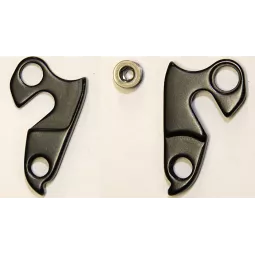
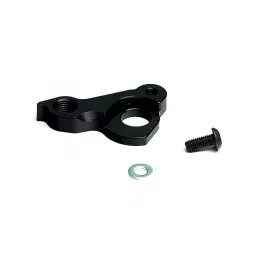
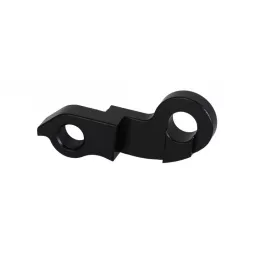
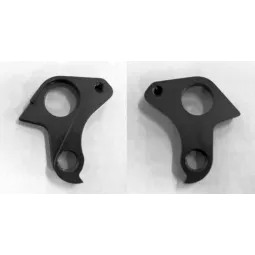
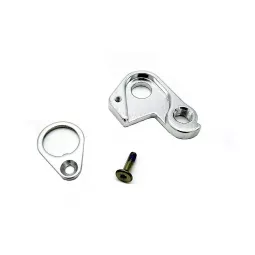
A frame hanger, often referred to as a replacement hanger or derailleur hanger, is a small but important part that ensures the correct connection between the drivetrain and the frame. In this category, you will find hangers for different frame and bike brands and models, varying in shape, compatibility and exact intended fit.
Sort by:







Frame hangers: how to choose the correct one
Frame compatibility | What to watch out for | A hanger is not a universal part
A frame hanger is a small but important part that has to match a specific frame or bike exactly. In this category, appearance is not the key factor — correct compatibility is. Even very similar-looking hangers can differ enough in mounting shape or fitment that they cannot be swapped between frames.
That is why the best way to choose the right hanger is to start with the exact frame brand and model, and in some cases also the generation or production year. This applies to brands such as Accent, Dartmoor, Mondraker and NS Bikes, as well as to specific frame lines where each model may use its own hanger design.
A hanger is not a universal part
The most important thing to understand is that hangers are generally not universal. Knowing only the bike brand is usually not enough. The correct hanger is typically identified by the specific frame model, and sometimes also by its year or generation. This is one of the most common reasons people end up with the wrong replacement part.
So if you are looking for a Dartmoor hanger, NS Bikes hanger or Mondraker hanger, the important question is which exact frame it is for. The same applies to more specific model-based variants. The more precisely you know your frame, the lower the risk of ordering the wrong part.
How to choose the correct hanger
- Bike or frame brand – this is the first orientation point, but it is not enough on its own. One brand may use several different hanger designs.
- Exact frame model – this is the key detail for choosing correctly. In most cases, the correct hanger is identified by the frame model.
- Year or generation – some frames use a different hanger on older and newer versions even when the model name looks similar.
- Shape and mounting design – similar appearance does not automatically mean the same compatibility. Small differences in shape, mounting points or contact surfaces can matter.
- Connection to the specific frame design – a hanger is always part of a particular rear triangle layout, so it should be treated as a frame-specific part, not a universal standalone component.
When this category is most relevant
This category is most commonly used when the original hanger has been bent, damaged or lost and needs to be replaced with the correct part. This usually happens after a crash, derailleur impact or when the rear drivetrain no longer works as it should.
If you are unsure about the correct option, always start with the exact frame or bike you have. With hangers, the specific model is usually what matters most, not just the brand. Two parts may look very similar, but differ enough in fitment or shape that only one of them will actually work.
If you are also looking at the wider frame setup, it may make sense to continue to frames, full-suspension MTB frames or the broader Frames and Forks section, where the frame or build can be understood in a wider context.
What to watch out for
The most common mistake is choosing a hanger based only on visual similarity or brand name. With hangers, the exact frame model is what usually matters. If you choose a part that looks “almost the same,” it may still fail to fit correctly at the mounting points.
A practical approach: first confirm the exact frame or bike model, then check the intended fitment of the hanger, and only then choose the product itself. In this category, precision matters more than speed, because the correct hanger has to fit exactly.