Availability
Brand
Price
Selections
diameter
colour
Gravel forks
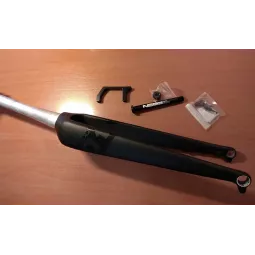
Gravel forks, meaning rigid front forks for gravel or all-road bikes, affect steering precision, front-end weight and how the bike performs on tarmac, gravel and longer mixed-surface rides. In this category, you will find gravel forks for different types of gravel and adventure use, varying in material, compatibility and practical mounting options.
Gravel forks: compatibility, material and practical use
Carbon vs. steel | Compatibility and standards | Mounts, clearance and bikepacking
A gravel fork is not just a replacement part, but a component that has a major effect on the bike’s overall character. The key factors here are weight, stiffness, steering precision, tyre clearance and compatibility with the frame, wheel and brakes. With gravel bikes, practical details such as mounts for cages, cargo cages or bags also matter, because the same fork can work for both fast all-road riding and longer bikepacking trips.
That is why the right choice is not simply about whether you want carbon. What matters is that material, steerer type, axle standard, clearance, brake standard and intended bike use all make sense together. Gravel bikes often combine road speed, confidence on gravel and practical use over long distances, so the fork has to work as part of the whole bike concept, not in isolation.
Carbon vs. steel or more robust solutions
A carbon gravel fork makes the most sense when you want lower weight, a sportier feel and a more responsive front end. In gravel bikes, carbon is often used to create a lighter, quicker setup without unnecessary extra weight. Depending on the design, it can also help filter smaller vibrations better than a purely rigid, heavy-duty front end.
A steel or more robust gravel fork makes more sense where durability, load-carrying ability or expedition and adventure use matter most. For bikepacking, longer trips and more practical builds, the decision is often not just about weight, but also about how the fork behaves under luggage and what mounting options it offers. Material choice is therefore not about what is universally “better”, but about what kind of bike character you actually want.
Compatibility: what to check before buying
- Steerer type – gravel forks are often tapered, but you need to verify what the frame accepts and which headset you are using. This is one of the most common compatibility points.
- Axle standard and hub spacing – gravel setups commonly use a thru-axle, but the exact standard and hub compatibility still matter. If the axle does not match, the front wheel will not fit, so it makes sense to also check hubs and rims.
- Brake standard – the fork must match the brake mounting type and the rest of the front-end setup. On gravel and all-road builds, clean compatibility matters a lot.
- Tyre clearance – this matters not only for the current setup, but also for future use. If you want to run wider gravel tyres or are thinking about a more bikepacking-oriented setup, clearance is worth checking from the start.
- Length and geometry – the fork needs to match the frame so the bike keeps the expected riding position, tracking and behaviour on both road and gravel. This is especially important on gravel bikes, because they sit between road and more off-road use.
Mounts, clearance and bikepacking overlap
Mounts for bottles, cargo cages or bags are one of the most practical details on gravel forks. On a purely sport-focused gravel bike they may not be a priority, but as soon as the bike moves toward longer rides, adventure use or bikepacking, mounting options become one of the deciding factors in how versatile the fork really is.
Tyre clearance is just as important. Gravel today is often more than just “a road bike for rougher asphalt” — it is a platform for dirt roads, forest tracks, fast all-road riding and light bikepacking. That is why it makes sense to think ahead about whether you want a faster narrow setup or a more versatile fork with extra room in reserve.
Practical note: people often focus mainly on material when choosing a gravel fork, but in real use it is just as important whether the fork has the right mounts, the correct axle standard and enough tyre clearance. These details are what determine whether the bike works only as a fast weekend gravel bike or as a genuinely versatile machine for longer and more varied rides.
If you want to solve a gravel build in a wider context, it makes sense to connect this category with Gravel and road, as well as with gravel bikes or the broader Forks category, where gravel sits within a wider range of rigid and specific fork solutions.
How do I choose a gravel fork?
Start with how you want to use the bike. Then verify the steerer, axle standard, brake standard, tyre clearance and any mounts. Only once compatibility and practical use are clear does it make sense to compare material or a specific model.
Carbon or steel gravel fork?
Carbon makes more sense when lower weight and a faster sport-focused feel are the priority. Steel or more robust solutions usually make more sense where durability, load-carrying and longer adventure or bikepacking use matter more.
How do I check gravel fork compatibility with my frame and wheel?
Check the steerer type, axle standard, hub spacing, brake mount and wheel size. With a gravel fork, it is also very important to see how it fits into the overall frame geometry and whether it provides enough clearance for the tyres you actually want to ride.
When do mounts for bags and cargo cages really matter?
Mainly when the bike is not meant only for sporty gravel riding, but also for bikepacking, longer trips or more versatile travel use. In that case, mounts significantly expand what the bike can do.
Does a gravel fork also make sense for bikepacking or adventure use?
Yes, very often. A gravel fork with sufficient clearance and practical mounts is often one of the key parts of a bike that needs to handle not only fast all-road riding, but also longer and loaded trips beyond ideal asphalt.