

-
Top offers
-
Bikes
-
Helmets & Goggles
-
Accesories


Availability
Brand
Price
Selections
diameter
colour
BMX forks
BMX racing forks, meaning front forks for racing BMX bikes, affect steering precision, front-end stiffness and how the bike behaves during sprints and on the track. In this category, you will find BMX race forks for different levels of racing use, varying in material, compatibility and steering character.
Sort by:

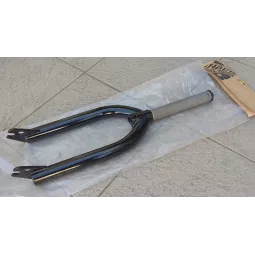


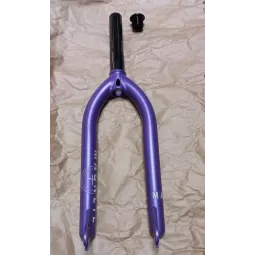
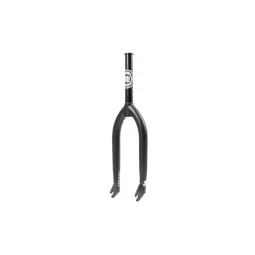
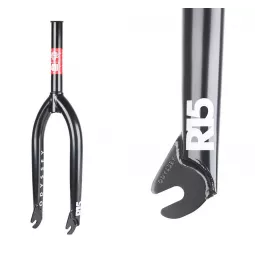




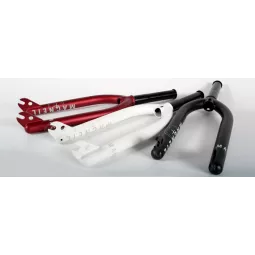
BMX racing forks: weight, stiffness and correct compatibility
Race use and steering | Offset, axle and compatibility | Material and fork character
A BMX race fork is a component that matters more in a race bike than it may first appear. It does not just hold the front wheel in place. It affects front-end stiffness, steering precision, how quickly the bike reacts during sprints and how stable it feels at speed. In BMX racing, these differences show up quickly because the bike is repeatedly loaded hard during the gate start, pumping sections and landings.
Choosing the right fork is therefore not only about picking the lightest option. What matters is that material, offset, axle standard, steerer type and compatibility with the frame and front hub all make sense together. On a BMX race bike, the front end is one of the areas where the differences between solutions are most noticeable.
What matters most on a BMX race fork
With a race BMX fork, the key points are low weight, sufficient stiffness and precise compatibility. A lighter and stiffer front end can help the bike feel more responsive under acceleration, more accurate through the line and quicker to react to rider input. This becomes most noticeable out of the gate, in the first pedal strokes and whenever power transfer into the bike needs to feel immediate.
At the same time, the lightest option is not automatically the best for every rider. For younger riders, training bikes or less race-focused setups, a more durable and simpler solution may make more sense. At a higher race level, however, riders more often care about every gram, front-end stiffness and the cleanest possible response.
Offset / rake and its effect on steering
Offset, or rake, affects the steering character of the front end. In practice, changing the offset changes how quickly and how calmly the bike reacts to steering input. A higher offset generally pushes the bike toward quicker steering response, while a lower offset tends to feel calmer and more stable. On a BMX race bike, this is not a theoretical detail but a parameter you can feel both on the track and when exiting corners.
That is why it makes sense to view the fork as part of the bike’s overall geometry rather than in isolation. What works well for one rider may not work the same way with a different frame or wheel size. If you take your race setup seriously, offset is one of the specifications that has a real effect on how the bike behaves, not just another line in the product sheet.
Compatibility: what to check before buying
- Front axle and hub – with BMX race forks, both 10 mm and 20 mm standards are common. Race-oriented setups more often work with 20 mm front ends, so before buying, it is necessary to verify that the fork matches the front hub and wheel.
- Steerer type – BMX race forks may use a classic 1 1/8" steerer, but some race-focused solutions also work with tapered / 1.5" setups. This needs to match the frame and, as a result, the BMX Race headset.
- Frame and geometry – the fork needs to make sense in combination with the specific frame. If you are solving the front end as a complete package, this category naturally connects to BMX Race frames.
- Front hub – on a race setup, hub compatibility is critical, which is why it makes sense to check BMX Race hubs alongside the fork.
- The wider BMX Racing segment – if you are choosing a fork as part of a bigger build or upgrade, it also makes sense to connect it to BMX Racing as a full segment and to BMX Racing bikes.
Material and fork character
The material of a BMX race fork mainly affects weight, stiffness and the overall character of the bike. In race use, it matters how quickly the bike reacts under power and how accurately it holds its line. That is why lighter and more performance-oriented solutions matter far more in higher-level race setups than in casual riding.
In that context, BOX Components stands out strongly in this category and makes sense as a light recommendation for riders focused on performance, lower weight and a more race-oriented feel. Haro Bicycles, Macneil BMX, Odyssey BMX and Sunday BMX add further alternatives with a different character, while NS Bikes and SD BMX Super Dupper work more as niche additions to a specifically targeted range.
Practical note: with BMX race forks, the difference between seemingly similar models often becomes obvious only on the track. During the gate start and sprinting, sensitivity to front-end weight and stiffness is much higher than in general BMX use. If race performance matters, this is one of the places where it makes sense to go deeper than price or appearance alone.
How do I choose a BMX race fork?
Start with compatibility. Check the axle standard, steerer type, frame fit, front hub and headset. Only then does it make sense to compare offset, material and weight based on how important race performance is for your setup.
What is the role of offset / rake?
Offset / rake affects steering response and front-end stability. On a BMX race bike, this parameter has a real influence on how the bike tracks on the course and how it feels in corners and under acceleration.
How do I check compatibility with the frame and front wheel?
Check the axle standard, fork steerer, headset and front hub compatibility. In BMX race setups, one of the most common mistakes is watching only one parameter and overlooking the rest of the front-end system.
Who benefits most from a light and stiff BMX race fork?
Mainly riders focused on race performance, acceleration, lower weight and more precise front-end response. In competitive BMX racing, these differences become much more noticeable than in casual use.