

-
Top offers
-
Bikes
-
Helmets & Goggles
-
Accesories


Availability
Price
Selections
colour
Pivotal Saddles
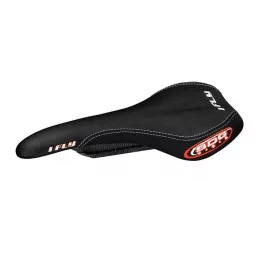
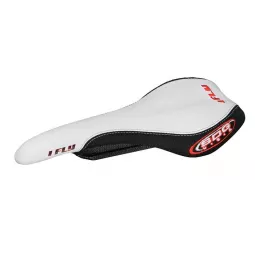
I-beam saddles use a specific mounting system with a central beam instead of classic saddle rails. In this category you will find SDG USA I-beam saddles for MTB, dirt, freeride and enduro use, designed for compatible I-beam seatposts.
Sort by:


How to choose an I-beam saddle by compatibility and use
What an I-beam saddle is | Compatibility | Advantages and limits | SDG I-beam system | Difference from standard and pivotal saddles | FAQ
An I-beam saddle is a specific saddle type that does not use two classic rails like regular bike saddles. Instead, it has one central beam profile that clamps into a matching I-beam seatpost. This system is more specialised and less universal than a standard railed saddle, but in the correct setup it can offer a clean mount, solid construction and a sport-oriented character.
Within bike saddles, the I-beam system is a more specific choice. It makes the most sense for riders who already use an I-beam seatpost, or who are building a bike around the SDG USA system. If you are not sure which seatpost type you have, check compatibility before choosing the saddle shape or design.
What is an I-beam saddle?
An I-beam saddle is easy to recognise because it does not have two traditional rails. Instead, it uses one central beam, sometimes described as a mono-rail system. This beam does not clamp into a regular seatpost head, but into a dedicated I-beam seatpost.
In practice, this means an I-beam saddle is not just a differently shaped standard saddle. It is a separate mounting system. If your bike has a regular seatpost for two rails, an I-beam saddle cannot be mounted directly. It is also not a pivotal or combo/integral system.
The advantage of the I-beam solution is a simple and firm mount through the central beam. The downside is lower compatibility and a smaller choice of seatposts and saddles compared with the standard railed system. That is why I-beam is mainly suitable for riders who deliberately use this system or already have the correct seatpost.
Compatibility is the main point
The key rule with I-beam saddles is simple: an I-beam saddle needs an I-beam seatpost. It does not fit a classic railed seatpost, a pivotal seatpost or a combo saddle system where the saddle and seatpost are one fixed unit.
If you are replacing only the saddle and keeping the current seatpost, first check which mounting system the seatpost uses. A classic clamp for two rails means you need a standard railed saddle, not I-beam. If the seatpost uses a central I-beam clamp, then this is the correct category.
When building a new bike, it makes sense to treat the saddle and seatpost as one system. I-beam can be a good choice if you want a specific SDG setup, but it is not ideal if your main priority is the widest possible choice of saddles across different brands.
When an I-beam saddle makes sense
An I-beam saddle makes the most sense for riders who already use an I-beam seatpost or are building a bike around the SDG USA system. You may come across model lines such as SDG I-Fly, SDG Bel-Air or SDG Formula, which are connected with sportier MTB, dirt, freeride or enduro use depending on the specific version.
For MTB, dirt, freeride or enduro use, a saddle is mainly about durability, shape, support while pedalling and not getting in the way when moving around the bike in terrain. The I-beam system fits this context when you want a specific SDG saddle and also have the matching I-beam seatpost.
If you are simply replacing a saddle on a mountain bike and do not know what seatpost system you have, I-beam should not be your first assumption. In that case, it is more practical to check the current mounting system first, or look at standard railed saddles.
Advantages and limits of the I-beam system
The advantage of the I-beam system is a clean mount through one central profile. The whole setup can look simpler and more compact than a classic saddle with two rails. On some models, low weight and a sport-oriented construction can also be interesting benefits.
The limit is clear: compatibility. I-beam saddles are not universal across regular seatposts. If you want to change saddles often, test different widths or have the widest choice across brands, the standard railed system will usually be more practical.
I-beam is therefore not a “better saddle for everyone”. It is a specific system for a specific setup. If it matches your seatpost, frame and riding style, it can make sense. If not, another mounting type will usually be the better option.
Difference from standard and pivotal saddles
A standard saddle uses two rails and is the most universal choice for MTB, trail, enduro and regular saddle replacement. An I-beam saddle uses one central beam and needs its own I-beam seatpost. This is the main difference that decides compatibility.
Pivotal saddles are another system, typical mainly for BMX, freestyle, street and dirt. They are mounted with a bolt from above into a pivotal seatpost. An I-beam saddle differs from the pivotal system in both construction and seatpost type, so the two systems are not interchangeable.
What to check when choosing an I-beam saddle
- Seatpost type: This is the key parameter. An I-beam saddle must be used with an I-beam seatpost. It does not fit a classic rail clamp.
- System compatibility: The saddle, seatpost and mounting type must be the same system. I-beam is not standard, pivotal or combo.
- Saddle shape: Check whether the saddle matches your riding style. A shape for active MTB riding may differ from what works best for dirt or freeride use.
- Width and support: The saddle should support the sit bones while not getting in the way when moving around the bike in terrain. For sportier riding, the widest saddle is not always the best option.
- Padding and durability: For MTB, dirt and freeride, look not only at comfort, but also at the durability of the cover and saddle sides. A saddle used in terrain takes more abuse than one used for calm city riding.
- Future availability: I-beam is a narrower system. If you want to swap saddles often or have the widest model choice, standard railed saddles will be more universal.
In practice: if you have an I-beam seatpost and want an SDG USA saddle in the matching system, this is the right category. If you have a regular railed seatpost, an I-beam saddle will not help without changing the seatpost. With this category, always start with compatibility first, then choose shape, weight, padding and the specific model.
What is an I-beam saddle?
An I-beam saddle is a saddle without two classic rails. It uses one central beam profile that clamps into an I-beam seatpost. It is a specific mounting system, mainly associated with selected SDG USA saddles.
Does an I-beam saddle fit a standard seatpost?
No. An I-beam saddle needs an I-beam seatpost. It does not fit a classic two-rail seatpost, a pivotal seatpost or a combo system. If you have a regular seatpost, choose a standard railed saddle instead.
Who does an I-beam saddle make sense for?
An I-beam saddle makes sense mainly for riders who already have an I-beam seatpost or are deliberately building an SDG I-beam setup. If you want the most universal solution and a wide saddle choice across brands, a standard railed saddle is usually more practical.