

-
Top offers
-
Bikes
-
Helmets & Goggles
-
Accesories


Categories
Availability
Price
Selections
colour
Dropper-post Levers
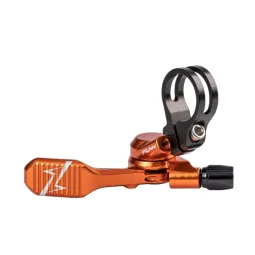
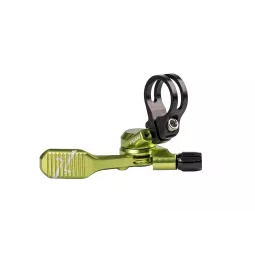
A dropper post remote lever allows you to control saddle height directly from the handlebar. It lets you lower the saddle before descents or technical sections and raise it back into an efficient pedalling position without taking your hands off the cockpit.
Sort by:





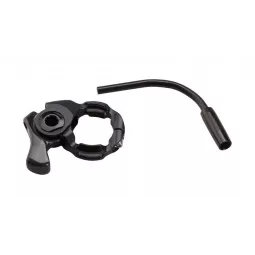
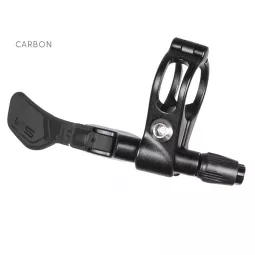
How to choose a dropper post remote lever by compatibility and handlebar type
Dropper post remote levers | KS compatibility | MTB handlebars | Gravel/CX drop bars | FUNN Updown | Ergonomics | Cable and housing | FAQ
A dropper post remote lever is used to control the seatpost directly from the handlebar. It lets you quickly lower the saddle before a descent, technical section or corner, and then raise it back into an efficient pedalling position. In practice, this means you do not need to stop or reach under the saddle in technical terrain. You can lower or raise the saddle while riding, depending on whether you need more clearance over the bike or an efficient seated position for pedalling.
Compared with a lever placed directly under the saddle, handlebar control is mainly safer and more convenient. It is more practical for MTB, trail, enduro, hardtail and gravel use, because your hands stay on the cockpit and you can use the dropper post more often and more precisely.
In this category, you will mainly find remote levers for Kind Shock dropper posts and more universal levers such as FUNN Updown.
Compatibility with KS dropper posts
With Kind Shock dropper post levers, compatibility with the exact model is essential. A lever may be intended for ranges such as KS LEV, LEV Integra, LEV Si, LEV DX, ETEN, ETENi, Rage-i, DropZone and other models, but that does not mean every lever automatically fits every seatpost.
The key details are cable attachment, routing type and the control design of the specific seatpost. Some systems have the cable head at the lever side, while others have it at the seatpost side. This detail can decide whether the lever will work correctly with the post.
If you are not sure about compatibility, do not choose only by appearance or similarity. Check the exact seatpost model, routing type and recommended lever. For related components, you can also use the KS parts and accessories category.
Lever choice by handlebar type and cockpit layout
On classic MTB, trail, enduro or hardtail handlebars, the lever is most often positioned so it can be reached comfortably with the thumb. On bikes with a 1x drivetrain, it is often mounted on the left side under the handlebar, similarly to a shifter. This makes the control feel natural and quick.
On gravel or cyclocross drop bars, the choice is different. A standard “MTB” lever may not be practical on drop bars because the hand position and access to the control are different. In that case, it makes sense to use a lever designed specifically for gravel or cyclocross cockpits.
Before choosing a lever, also check the available space on the handlebar. The lever must not collide with the brake lever, shifter, grip or clamps of other components. A good lever position is one where you can reach it without changing grip and without an unnatural hand movement.
FUNN Updown as a universal-style lever
FUNN Updown belongs among the more universal remote levers for dropper post control. It makes sense as an upgrade for riders who want a better feel under the thumb, more precise action and a firmer construction than a basic lever.
With similar upgrade levers, riders often consider material, ergonomics, lever bearing or pivot design, adjustability and how naturally the lever fits into the cockpit. Aluminium or CNC construction can offer a firmer feel and longer durability, but the lever still has to be compatible with the specific seatpost and cable attachment system.
Material, ergonomics and lever feel
A basic lever may be plastic or composite and can work well if it is installed correctly and is compatible. An aluminium or CNC lever usually offers a firmer feel, more precise construction and better durability with frequent use.
Ergonomics are just as important as material. A good lever should be reachable with the thumb without changing grip, should have natural resistance and should not interfere with the brake or shifter.
Lever feel is not determined only by the lever itself. The cable, housing and routing also play a major role. If the housing is kinked, dirty or has too much resistance, lever action will be worse even with a higher-quality lever.
What to check when choosing a dropper post lever
- Seatpost model: Check whether the lever is compatible with your specific KS seatpost or another mechanically operated dropper post.
- Cable attachment: Check whether the lever matches where your seatpost uses the cable head.
- Routing type: The lever must match a mechanically operated post with cable and housing. Wireless dropper posts use a different type of control.
- Handlebar type: You will choose a different lever for classic MTB handlebars than for gravel or cyclocross drop bars.
- Cockpit space: The lever must be positioned so it does not collide with the brake, shifter, grip or other clamps.
- Cable and housing: If the lever feels stiff, the lever itself may not be the problem. Cable and housing condition and routing often decide the final feel.
In practice: first check seatpost compatibility and the cable attachment type. Then consider handlebar type, cockpit position and ergonomics. Material, colour and design make sense only once you know the lever will work correctly with the seatpost.
How do I know which lever fits my KS dropper post?
Check the exact seatpost model, routing type and cable attachment system. With KS seatposts, there can be differences between LEV, LEV Integra, LEV Si, LEV DX, ETEN, ETENi, Rage-i or DropZone ranges. If you are not sure, choose according to the official compatibility of the specific lever.
Is there a difference between a lever for MTB handlebars and gravel/cyclocross drop bars?
Yes. On classic MTB handlebars, the lever is usually operated by the thumb from a standard grip position. On gravel or cyclocross drop bars, you need to consider a different hand position and access to the lever from a specific grip.
Is an aluminium or CNC lever worth it compared with a basic plastic lever?
An aluminium or CNC lever can offer a firmer feel, more precise construction and better ergonomics. It is especially worthwhile if you use the dropper post frequently. However, always check compatibility with the seatpost and cable attachment system first.