

-
Top offers
-
Bikes
-
Helmets & Goggles
-
Accesories


Availability
Price
Selections
diameter
Travel
KS Rage Circuit Wireless
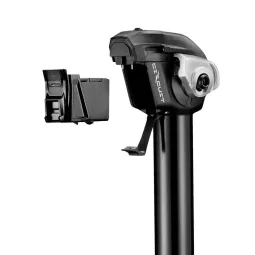
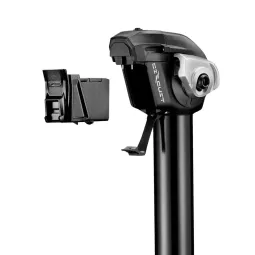
KS Rage Circuit Wireless is a wireless Kind Shock dropper post without a traditional cable and housing.
Sort by:


What KS Rage Circuit Wireless is and how to choose it by battery, travel and frame
KS Rage Circuit Wireless | Kind Shock Rage Circuit | Wireless control | 2.4GHz system | Battery and charging | 30.9 / 31.6 mm diameter | 120–180 mm travel | Rage Circuit vs LEV Circuit | Wireless vs internal vs external routing | FAQ
KS Rage Circuit Wireless is a wireless Kind Shock dropper post without a traditional cable and housing. Compared with a regular fixed seatpost, it allows you to change saddle height while riding, so you can pedal efficiently on climbs and lower the saddle before a descent for better control over the bike.
The main difference compared with classic internally or externally routed dropper posts is the control system. Kind Shock Rage Circuit Wireless does not use housing routed through the frame or externally along the frame. The handlebar remote communicates with the post electronically, so the installation is cleaner and there is no mechanical control routing to manage.
What KS Rage Circuit Wireless is
KS Rage Circuit Wireless, also known as Kind Shock Rage Circuit, is a wireless dropper post with electronic handlebar control. It is designed for riders who want the benefit of a dropper post without a cable, housing or frame cable-routing concerns.
Within the KS wireless dropper post range, it makes sense to understand it as a more accessible alternative next to the higher LEV Circuit Wireless range. The main benefit remains the same: clean wireless handlebar control without mechanical routing.
Who Kind Shock Rage Circuit Wireless makes sense for
Kind Shock Rage Circuit Wireless makes sense for riders on modern MTB, trail and hardtail bikes who want a clean cockpit without housing, easier installation and fast saddle-height control while riding.
You should notice the biggest benefit in technical terrain. A lower saddle position helps you work better with body weight, ride steep sections, corners and rough terrain with more confidence, and gain more space over the bike. With 150 or 180 mm travel, the difference compared with a fixed seatpost is already significant.
If you want the simplest possible mechanical solution without a battery, a classic internally routed or externally routed dropper post may be more practical. Rage Circuit Wireless makes the most sense when you want wireless control, clean installation and do not mind checking the battery.
Wireless control without cable and housing
With KS Rage Circuit Wireless, there is no cable or housing running from the handlebar to the seatpost. Control is electronic between the handlebar remote and the post itself. This means you do not need to route housing through the frame or run control housing externally along the frame.
The wireless system is based on electronic communication between the remote and the post. This removes cable-tension adjustment and the need to deal with sharp housing bends. The possible downside is the battery and electronics. With a wireless dropper post, you need to monitor battery charge, remote function and battery condition. It is not complicated, but it is a different maintenance habit than with a mechanically operated dropper post.
Battery, charging and runtime
KS Rage Circuit Wireless uses a removable rechargeable battery in the seatpost. The handlebar remote uses a CR2032 battery. This means the control system does not require a cable or housing, but you still need to keep the post charged and monitor the battery in the remote.
Real battery life depends on frequency of use, temperature, battery condition and ride duration. If you use the post often in technical terrain, the battery will discharge faster than with occasional use. Before a longer ride, weekend trip or race, it is therefore sensible to check the battery level.
In practice: with a wireless dropper post, checking the battery becomes a similar habit to checking a wireless drivetrain. When the system is charged and paired correctly, use is very clean. If you do not monitor the battery, you can end up with electronic control that is not ready for the ride.
Hydraulic cartridge and post action
Rage Circuit Wireless uses a hydraulic cartridge. With this type of post, it is important to understand that wireless control only solves the activation method; the actual post movement is still mechanical-hydraulic. That is why it makes sense to check return speed, smooth action and stability under load after installation.
After correct installation, the post should return smoothly, should not sink under rider weight and the control should respond naturally. If the post returns slowly, feels rough or has excessive play, check setup, battery condition, seatpost clamp torque or service condition.
Also pay attention to seatpost clamp torque. An overtightened clamp can negatively affect dropper post action. Tighten it carefully according to the frame and post recommendations, not harder just to be safe.
Durability, water and electronics
KS Rage Circuit Wireless is designed for MTB use, where dust, moisture, mud and frequent seatpost movement are common. The electronics and battery are part of a construction intended for off-road use, not only clean road conditions.
Even so, it is worth treating the post as a moving component with electronics. After a wet ride, clean it sensibly, avoid unnecessary pressure washing directly at the seals, battery or remote, and regularly check that the post returns smoothly.
Seatpost diameter: KS Rage Circuit 30.9 / 31.6 mm
KS Rage Circuit Wireless is offered in 30.9 mm and 31.6 mm diameters. The seatpost diameter must match the internal diameter of the frame’s seat tube exactly.
KS Rage Circuit 30.9 mm is suitable for frames with a 30.9 mm seat tube, which is a common size on modern MTB, trail and hardtail frames. Always verify the diameter according to the frame’s technical specification.
KS Rage Circuit 31.6 mm is intended for frames with a larger seat tube diameter. With a wireless dropper post, the same mechanical rules apply as with a regular seatpost: the correct diameter is the foundation. Without it, there is no point in solving electronics, battery or travel.
Travel, length and insertion depth: 120 / 150 / 180 mm
KS Rage Circuit Wireless is offered with 120 mm, 150 mm and 180 mm travel. Travel defines how far the saddle can drop. More travel gives more clearance over the bike on descents, but it also usually means a longer post and higher frame requirements.
KS Rage Circuit 120 mm makes sense for smaller frames, lower saddle heights or situations where you want a wireless post but do not have room for long travel. Shorter travel is not a worse choice if it better matches the frame and riding position.
KS Rage Circuit 150 mm is a more universal trail and MTB value. It gives a clear saddle drop in technical terrain, while still often being easier to match with the frame than the longer 180 mm version.
KS Rage Circuit 180 mm makes sense for taller riders, larger frames and more aggressive trail or enduro use. Before choosing, you need to verify overall post length, minimum insertion depth and correct saddle height. The highest travel is not automatically the best option if the post does not fit the frame.
KS Rage Circuit Wireless vs KS LEV Circuit Wireless
KS Rage Circuit Wireless and KS LEV Circuit Wireless are both wireless Kind Shock dropper posts without a traditional cable and housing. The main differences are model level, construction, price and available variants.
Rage Circuit Wireless makes sense as a more accessible wireless solution for riders who want clean control without housing, but do not want to move into the higher range. LEV Circuit Wireless can be seen as the higher wireless range based on LEV logic, with broader trail and enduro use and travel up to 200 mm.
In practice: if you want a more accessible entry into wireless KS dropper posts, Rage Circuit Wireless makes sense. If you want a higher-level KS wireless post, longer travel and broader use for more demanding trail or enduro, LEV Circuit makes more sense. With both, diameter, travel, length, insertion depth, battery and frame fit still decide.
Wireless vs internally routed vs externally routed dropper post
A wireless dropper post offers the cleanest installation from the control-system point of view. It does not need a cable, housing or frame routing. It does add a battery, electronics and the need to check charge. It makes sense for riders who want a clean setup and the comfort of wireless control.
Internally routed dropper posts are a clean mechanical solution for frames prepared for housing routing inside the frame. They do not need a battery, but they require correct internal housing routing.
Externally routed dropper posts make sense where you do not want to or cannot route housing through the frame. Installation is mechanically straightforward, but the housing is visible and more exposed to external influences.
What to check when choosing KS Rage Circuit Wireless
- Seatpost diameter: In this category, you mainly choose between 30.9 mm and 31.6 mm. The diameter must match the frame exactly.
- Travel: 120 mm is suitable where there is less space. 150 mm is a more universal trail value, while 180 mm is for larger frames, taller riders and more aggressive use.
- Overall length: The post must fit into the frame and still allow correct saddle height when fully extended.
- Minimum insertion: Every dropper post must be inserted at least to the marked minimum insertion line. With longer travel, this can decide compatibility.
- Saddle height: Do not choose only by rider height. The important measurement is the real distance from the frame to the saddle rails at the correct setup.
- Battery: The post uses a rechargeable battery and the remote uses a CR2032 battery. Before a longer ride, it is worth checking the battery level.
- Remote: Check whether the handlebar remote position suits you and whether you can use it comfortably in terrain.
- Saddle compatibility: With saddles using carbon or oval rails, always check compatibility with the specific saddle clamp.
- Seatpost clamp: An overtightened clamp can worsen post action. Tighten it carefully according to the frame and post recommendations.
- Function after installation: After installation, check smooth return, remote response and whether the post sinks under load.
In practice: first check the frame diameter, either 30.9 or 31.6 mm, then measure saddle height and available insertion depth inside the frame. Only after that should you choose 120, 150 or 180 mm travel. Wireless control should be considered only once you know the post mechanically fits the frame.
Is KS Rage Circuit Wireless completely cable-free?
Yes. KS Rage Circuit Wireless is a wireless dropper post without a traditional cable and housing between the handlebar and the post. Control is electronic via the handlebar remote, so you do not need internal or external housing routing.
What KS Rage Circuit Wireless travel should you choose?
120 mm travel makes sense for smaller frames or lower saddle heights. 150 mm is a more universal trail value. 180 mm is suitable for taller riders, larger frames and more aggressive trail or enduro use, provided the post fits the frame.
How does the battery work on KS Rage Circuit Wireless?
The post uses a removable rechargeable battery and the handlebar remote uses a CR2032 battery. Real runtime depends on frequency of use, temperature, battery condition and ride duration. Before a longer ride, it is sensible to check the charge.
What is the difference between KS Rage Circuit Wireless and KS LEV Circuit Wireless?
KS Rage Circuit Wireless is a more accessible wireless solution with 120, 150 and 180 mm travel. KS LEV Circuit Wireless is the higher wireless range with broader trail and enduro use and travel up to 200 mm. Both posts are cable-free and housing-free.